Report background
China AgencyScope is a biennial study co-published by R3 and SCOPEN. The 2026 edition marks its 11th year in China and runs concurrently across 12 global markets, providing cross-market benchmarks on key performance indicators. This edition surveyed 288 marketing decision-makers from 212 local and multinational companies, analyzing 959 client–agency relationships in depth.
As R3 observes, under the dual pressure of budget tightening and ROI accountability, marketing in China is shifting from "expanding spend" to "demonstrating value." Highly fragmented touchpoints are rewriting the rules of brand–consumer engagement. With traditional growth levers weakening, new growth must be unearthed from shifts in consumer demand and media. As a result, the role of agencies is being redefined — from execution vendors to business-led growth partners.
Marketing Enters an Era of Value Accountability
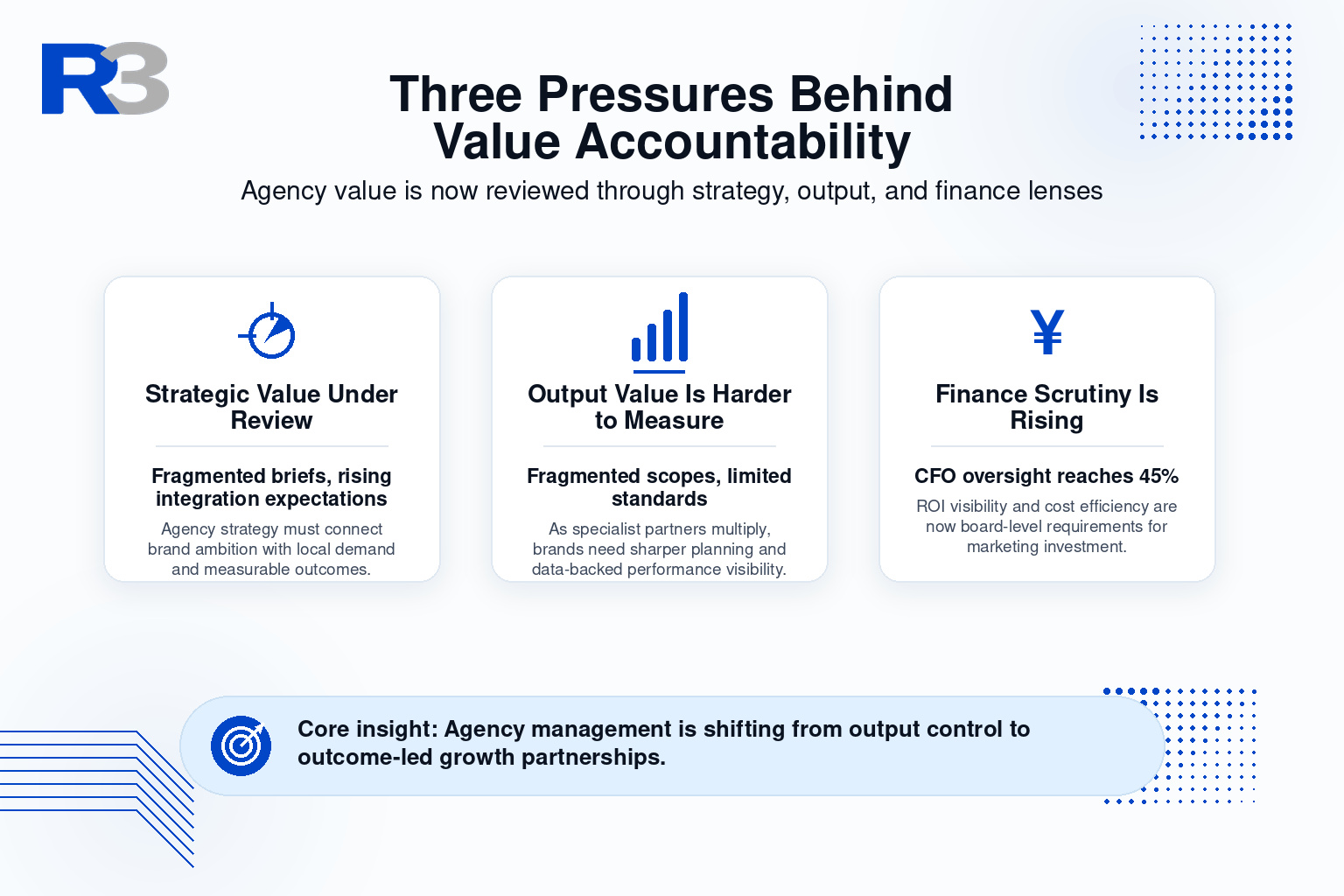
According to the study, 68% of marketers have cut marketing budgets due to the current economic climate, and "proving ROI / effectiveness" ranks as their second-largest future challenge.
Meanwhile, CFO oversight of marketing spend has risen to 45%. On the consumer side, 47% say they only buy essentials, and 54% prioritize low-price e-commerce platforms.
Multi-Partner Ecosystems Dominate; Lead Agency Model Declines
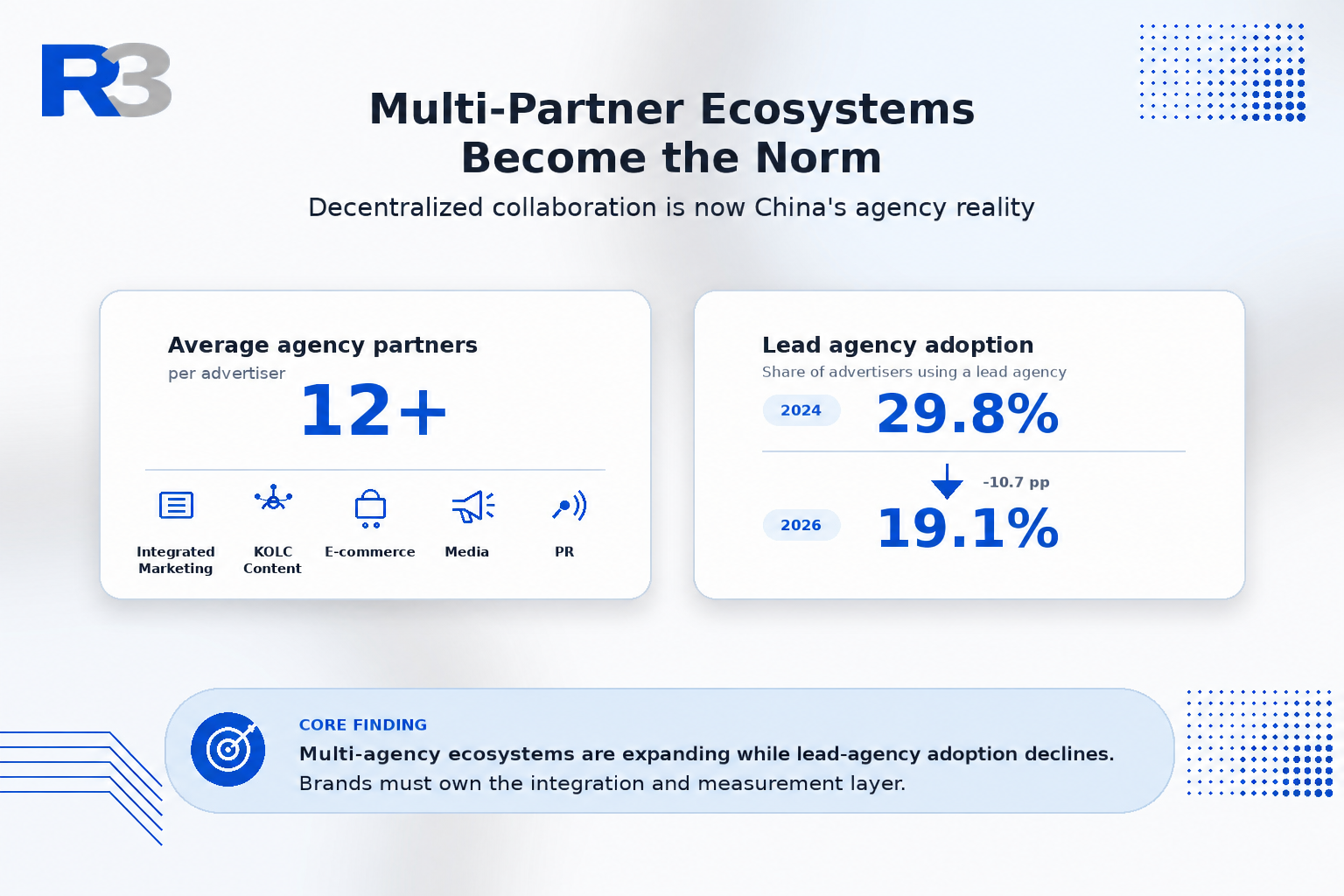
On average, marketers in China work with around 12 partners, with IMC, KOL-buy and commerce agencies forming an increasingly complex ecosystem.
The share of marketers working with a lead agency has dropped from 29.8% (2024) to 19.1% — below both the global average and mature markets such as the UK.
At the same time, relationships are increasingly managed on a project basis, with remuneration standardized around project fees. Amid this fragmentation, the lack of integrated strategy (50.5%) and unclear measurement (46.3%) have become the biggest bottlenecks in cross-platform operations.
From Channel-First to Business-Led — R3's Agency Model Reset
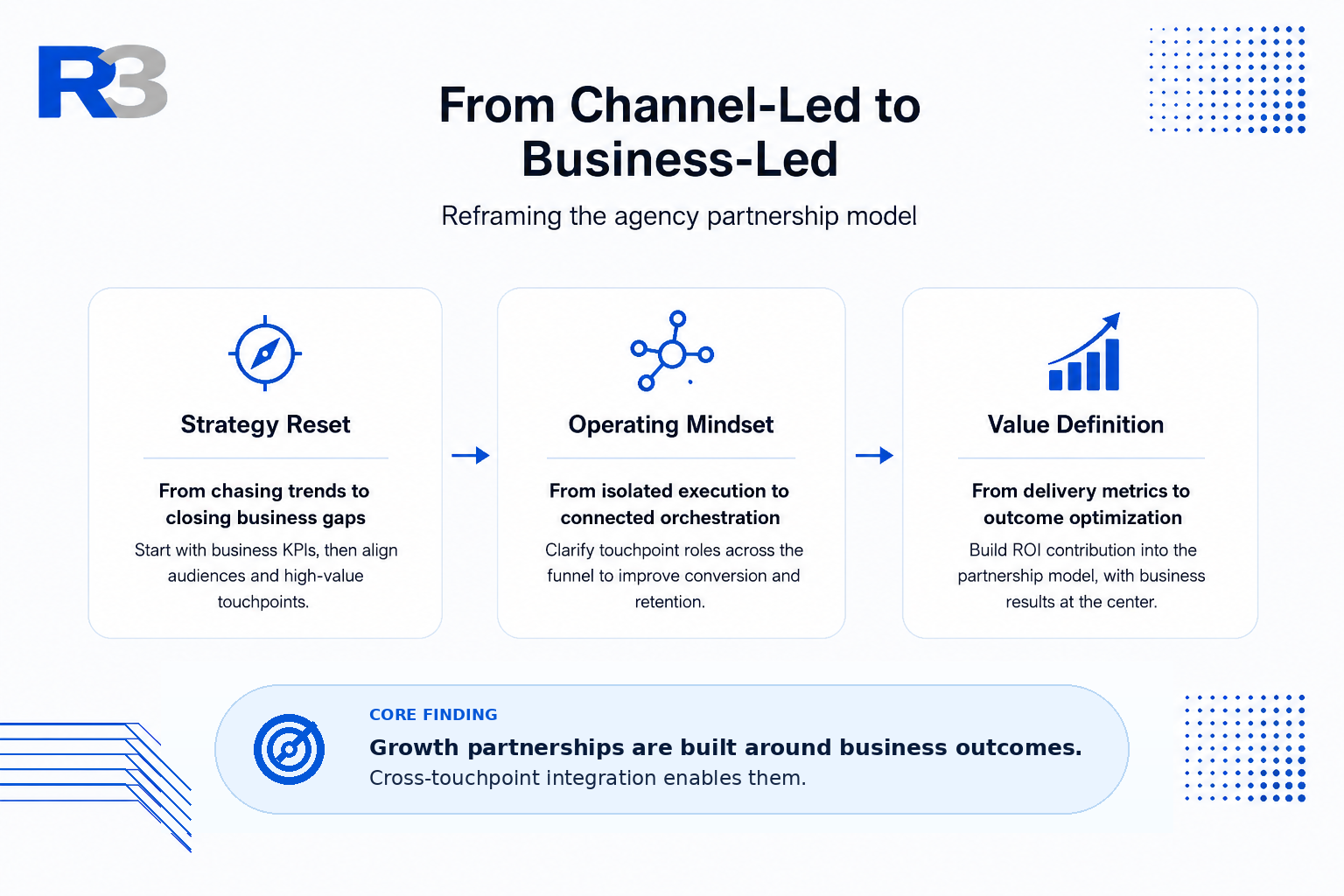
R3 argues that single-channel or siloed execution can no longer drive real growth. Agencies need a new service model centered on business results and cross-touchpoint integration: strategically, shifting from "trend-chasing" to "business gap-filling" — defining business KPIs first, then matching audiences and high-impact touchpoint combinations; operationally, moving from "point execution" to "holistic synergy"; and in value definition, shifting from "delivery-driven" to "result-optimized," with ROI contribution built into the cooperation model.
As an independent marketer-side consultant, R3 provides agency relationship management, media efficiency auditing and investment effectiveness evaluation, helping brands pre-calibrate "why we spend, where we spend, and how we spend."