Media Buying Transparency Returns to the Center Stage
Transparency in China’s media buying market has once again taken center stage. For both multinational and local marketers, the key question is not simply whether brokers are used, but how to clarify their role, identify the risks associated with broker involvement, and build stronger mechanisms to protect media spend in a complex supply chain.
Why Brokers Remain Deeply Ingrained in China’s Media Supply Chain
In China, brokers typically act as intermediaries that facilitate bookings and payments between agencies and media publishers. Their role has evolved from historical media trading practices and remains linked to fragmented media resources, agency cash flow pressures, smaller media buying needs, and agency trading profit structures. Brokers are unlikely to disappear from China’s media market, but their involvement needs to be managed with greater transparency.
How Marketers Can Safeguard Media Investment
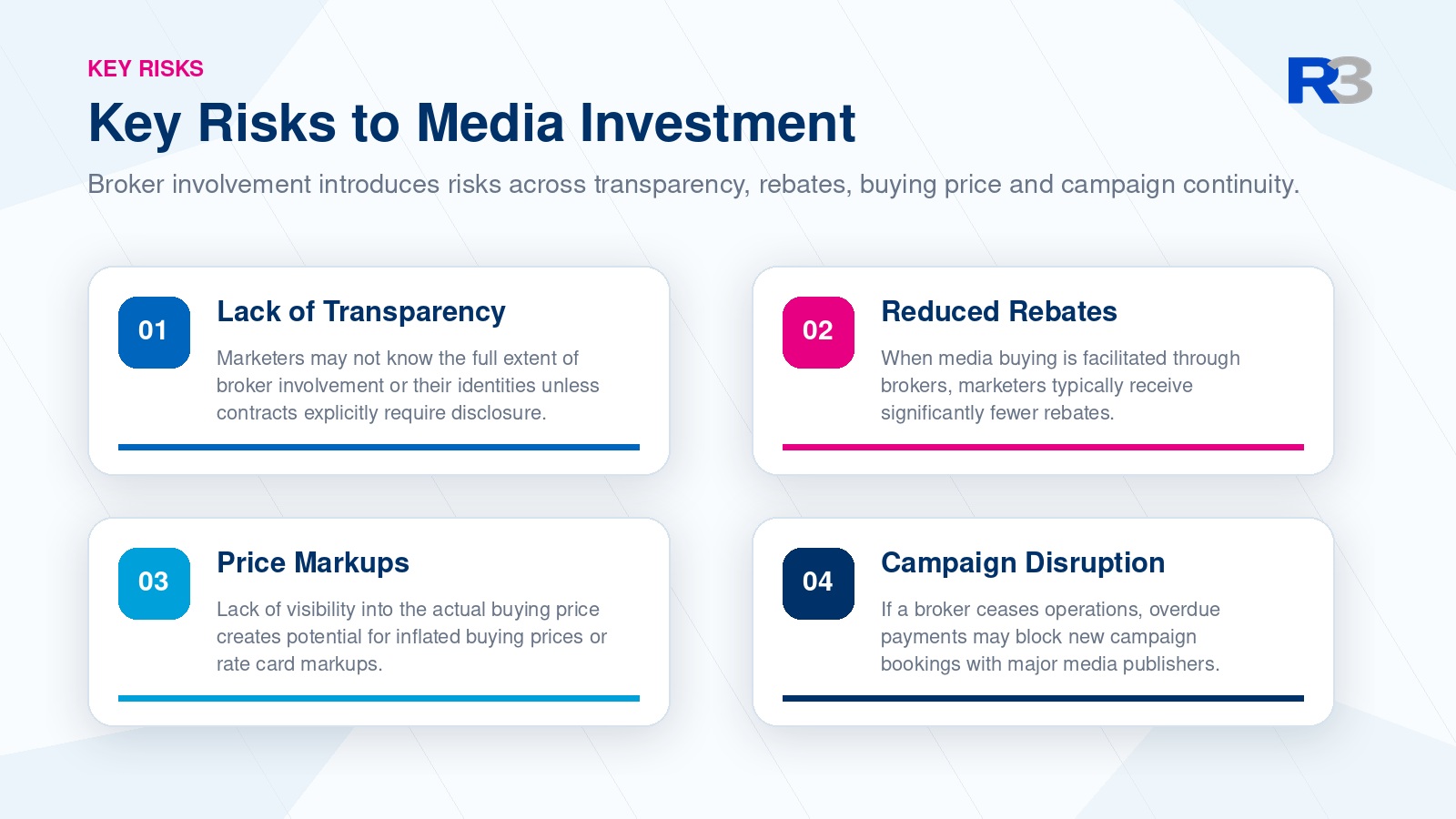
Broker involvement can introduce several risks, including lack of transparency, reduced rebates, potential price markups and campaign disruption. R3 recommends that marketers strengthen agency contracts by requiring full disclosure of third-party vendors, ensuring the Right to Audit covers broker information during performance audits, and insisting on rebate reporting at a granular level by media publisher and media buying volume. Marketers should also negotiate upfront cost caps and minimum cash rebate commitments to improve the safety and competitiveness of their media investment.